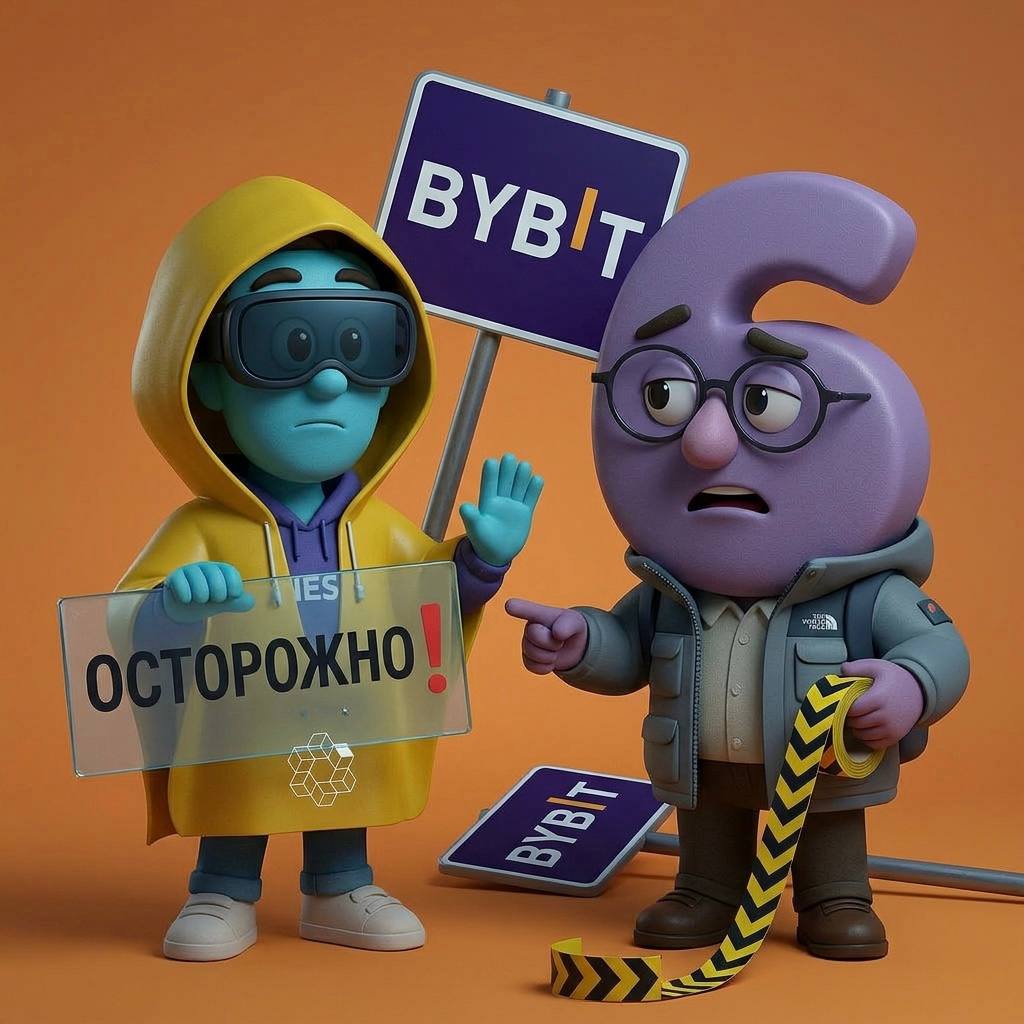
Is ByBit Blocking Russians in 2026? The Truth and Ultimate Security Guide
In early 2026, the crypto community was shaken by a wave of alarming news: users of one of the world's largest exchanges began facing sudden account freezes. Rumors that ByBit is blocking Russian users spread rapidly across social networks. Let's break down what is actually happening with exchange access in Russia, what new laws are taking effect, and how to reliably secure your digital assets.
Restrictions Imposed by ByBit
The issues began late last year when the European branch, ByBit EU, started denying service to Russian citizens. These closures affected everyone, even individuals holding valid residence permits in European Union countries. When attempting to update their verification data, clients received notices that their accounts would be closed due to the platform's updated internal compliance policies.
Furthermore, the platform has severely limited functionality for Russian citizens on a global scale. Driven by international sanctions, ByBit has disconnected Russian banks from its P2P platform. Direct fiat deposits and withdrawals via local bank cards are no longer available, forcing traders into risky workarounds. We have thoroughly analyzed the pitfalls of these restrictions in our previous article about ByBit P2P.
Russia's Move to Block Foreign Exchanges
Users are caught between two fires. Alongside exchange-imposed sanctions, the Russian State Duma is preparing comprehensive legislation slated to take effect by July 1, 2026. The new regulatory framework aims to block foreign crypto exchanges operating without a local license, specifically targeting platforms like ByBit and OKX.
Experts anticipate that Roskomnadzor, the federal censorship agency, will restrict access to these websites to funnel traders toward regulated domestic platforms. Consequently, users could lose web access to their foreign exchange accounts overnight.
How to Safely Manage Crypto in Russia
This dual pressure highlights the golden rule of 2026: storing capital on Centralized Exchanges (CEX) is no longer a viable option. To avoid falling victim to political decisions and sudden account suspensions, follow these guidelines:
- Use centralized exchanges strictly for quick trading or swapping, never for long-term storage.
- Stay informed about potential ISP blocks and regulatory updates, as well as changes in exchange policies.
- Migrate the majority of your portfolio to non-custodial solutions where you exclusively own the private keys.
OneSix: Secure Storage Without Blocking Risks
In an environment where centralized platforms can freeze your funds based on your passport or IP address, self-custody wallets are the ultimate solution. OneSix is a modern crypto wallet designed with a strong focus on financial freedom and uncompromised security.
OneSix was developed with the realities of 2026 and the increasing pressure of sanctions on Russians in mind. We focus on the security of Russian users: the service is not tied to Russian banks, is resistant to blocking by individual exchanges, and helps minimize the risks associated with document checks and citizenship restrictions. OneSix's infrastructure is designed to ensure you can continue using cryptocurrency even in the face of stricter regulations and potential shutdowns of foreign exchanges.
