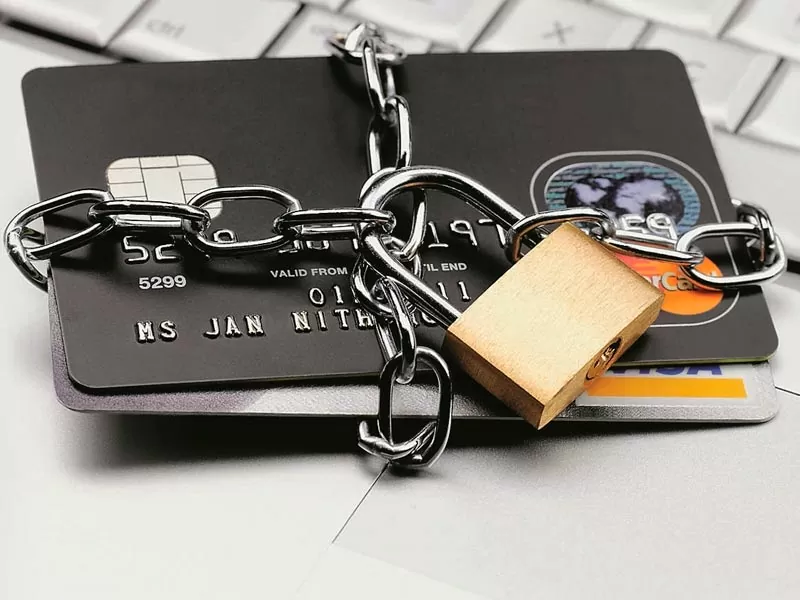
Card Blocked After Selling USDT: Why It Happens and What to Do
This article explains the general legal framework and mentions OneSix, a product of the company that owns this blog. It is not an independent market review.
A Russian bank card is not restricted because you sold cryptocurrency. It is restricted because of the incoming transfer: the rubles your buyer sent triggered the bank's anti-fraud checks, or your details ended up in the Bank of Russia database. What matters is the first 24 hours — confirm the operation with the bank, gather proof of where the funds came from, and, if your details are in the database, file an application to have them removed. Below is what actually happens, why two very different legal mechanisms produce the same-looking block, and in which order to get your account back.
Why an ordinary trade gets your card frozen
Selling digital currency is lawful in itself. Digital currency is recognised as property in Russia, and nobody has banned owning or selling it. The problem arises on the banking side of the deal — the moment rubles from a stranger land on your card.
The most common scenario on P2P platforms works like this. A fraudster gains access to a victim's money and sends it not to themselves but to a third party — you, the crypto seller waiting for payment on an open order. You release the USDT, the buyer walks away with the asset, and the victim goes to their bank and the police. On paper, the money came from someone else's card without that person's genuine consent, and the trail ends at your account, because there is nothing traceable after it.
To the bank you are not an injured party in this picture. You are the recipient of a payment carrying fraud indicators. The bank does not know, and is not required to establish, that you honestly sold an asset — it sees an incoming transfer and is obliged to react.
The second common case is a series of similar incoming payments from different individuals. Even when every trade is clean, regular transfers of similar amounts from unfamiliar senders look like cash-out activity or like servicing someone else's payment flow.
Two different mechanisms behind the same block
Restrictions look identical on your screen, but the legal basis differs, and so does the path back. Establishing which one applies to you is the first thing to do.
Anti-fraud under the National Payment System law
Banks are required to check transfers for indicators that an operation is being carried out without the client's genuine consent — this comes from Part 3.1, Article 8 of Federal Law No. 161-FZ "On the National Payment System". The list of indicators is approved by the Bank of Russia and published on its website; it was updated at the start of 2026.
When an indicator is found, the bank suspends execution of the instruction for two days. If the client confirms that the transfer is genuinely intended, the bank must process it; without confirmation, it does not repeat the operation (Parts 3.8 and 3.9 of the same article).
Running alongside this is the Bank of Russia database of cases and attempted transfers made without the client's genuine consent. Banks report such operations into it and receive the pooled data back. Once your details are in the database, restrictions come not from one bank but effectively from all of them: cards and remote banking stop working, and opening a new account becomes difficult. This is the scenario people usually describe as "ending up on the blacklist".
Anti-money-laundering control
The second framework is Federal Law No. 115-FZ. Under it a bank may request documents on an operation, refuse to carry it out, and in certain cases apply stricter measures limiting how you dispose of the funds. The suspicion here is different: not fraud, but money laundering, or a personal account being used for business activity.
The remedy is also different. First you submit documents and explanations to the bank; if the bank upholds its decision, you apply to the interdepartmental commission set up at the Bank of Russia. The procedure is described in the guidance issued by the Bank of Russia and Rosfinmonitoring.
You usually cannot tell from the bank's message which mechanism was triggered: the law does not require disclosure of the operation behind the restriction. So the first step is not an argument — it is finding out the legal ground.
What to do in the first 24 hours
- Contact the bank and establish exactly what is restricted: a single operation, the card, remote banking, or the account as a whole. Ask which law applies — 161-FZ or 115-FZ.
- Confirm the operations you performed yourself. If the bank suspended your own transfer, your confirmation lifts the suspension.
- Do not move the balance to relatives' cards and do not split the amount into smaller transfers. That is precisely the pattern that deepens suspicion and adds new episodes to your history.
- Collect the documents for the disputed trade the same day, while the platform export is still available: the order record, chat history, the blockchain transaction ID, the time and the amount.
- Submit a written application to the bank explaining the origin of the funds, with the documents attached. A phone conversation does not count — you need a registered submission with a reference number.
- If the money came from a fraud victim, expect contact with the police. Your position is that of a good-faith seller, and it is supported by trade documentation, not by explanations alone.
- If your Russian is limited, put your explanation in writing in Russian and keep a copy. Verbal exchanges at a branch tend to leave no record you can later rely on.
How to get your details removed from the Bank of Russia database
If the bank refers to information from the Bank of Russia database, arguing with the bank is pointless: it neither maintains that database nor can it delete anything from it. The appeal procedure is set out in Bank of Russia Instruction No. 6748-U and described on the regulator's website.
- File an application with any bank where you are a client. The bank must forward it to the Bank of Russia no later than the next business day, unless there are grounds to refuse the transfer.
- Alternatively, submit the application directly through the Bank of Russia online reception, choosing the "Information security" topic and the relevant problem type — removal of data from the database of cases and attempted operations without the client's consent.
- Include the mandatory details: your personal data, phone number, and the name and BIC of the bank that told you about the inclusion. Incomplete applications are returned without review.
- Attach documents supporting the lawfulness of your operations: trade confirmations, statements, an explanation of the source of funds.
- Wait for the decision. Under the current procedure, an application is reviewed within 15 business days.
Removal from the database does not automatically reverse a specific bank's decision under 115-FZ. If both lines were triggered, each has to be closed separately.
Documents worth keeping for every trade
The burden of showing that your operations were lawful falls on you, not the bank. The set that actually helps:
- the platform's order record or receipt with date, amount, rate and trade ID;
- the blockchain transaction ID and the recipient address;
- an account statement covering the period of the disputed incoming payment;
- documents showing where the crypto itself came from: a client contract, an invoice, proof of payment from the client if you were paid in USDT;
- proof that the income was declared, if a return has already been filed.
Tax is a separate point. Simply holding digital currency creates no tax liability; income from selling it is taxable, and the calculation and reporting rules sit in Chapter 23 of the Tax Code. If you are a foreign national, your tax residency status determines how those rules apply to you. Documented tax compliance strengthens your position with the bank considerably, because it removes the suspicion of undeclared business activity.
How to reduce the risk next time
The risk cannot be eliminated: you do not control where your buyer got their money. But the chance of ending up in a fraud chain drops noticeably if you:
- avoid selling crypto to unknown buyers who pay directly onto your primary personal card;
- walk away from trades offering a rate well above the market, asking to split the payment across several transfers, or paying from several different people's cards — these are signs of someone else's payment flow being pushed through you;
- decline transfers labelled "loan repayment" or "gift" — a cover story in the payment reference works against you, not for you;
- save the documentation for each trade immediately, not once the card is already restricted and platform history is out of reach;
- never let anyone use your card for their settlements in exchange for a fee — that is no longer a blocking risk but a criminal one.
The other approach is to avoid the "stranger sends money to my card" format altogether. If your goal is not cash but settling a specific ruble bill, the sale and the payment happen inside one service, and no incoming transfer from a private individual reaches your card at all. That is how ruble SBP QR code payments work in the OneSix Telegram mini app: the rubles go straight to the payee. An honest caveat — on rate alone a P2P trade on an exchange is usually better, so if your priority is the maximum number of rubles per USDT, the choice will be different.
Related questions
Can a bank block a card without explaining why?
The bank must notify you of the restriction, but it is not obliged to disclose the operation that caused it. You are entitled to learn the legal ground; you will not be told the details of someone else's transfer.
How long does a restriction last?
A suspension of a single transfer on anti-fraud grounds lasts two days. A restriction linked to the Bank of Russia database lasts as long as the data remains there. A 115-FZ review has no fixed deadline and depends on how convincing your documents are.
Can I just open an account at another bank?
If your details are in the Bank of Russia database, they are visible to all banks, so a new account solves nothing. Routing money through a relative's account creates risk for them instead.
Is selling cryptocurrency illegal in Russia?
No. Specific actions are prohibited: accepting digital currency as payment for goods and services inside the country, taking part in cash-out schemes, and handing your card to third parties. Selling property is not among them.
Sources
- Bank of Russia: appealing inclusion in the database of transfers made without the client's consent (in Russian)
- Bank of Russia and Rosfinmonitoring guidance on account restrictions (in Russian)
- Federal Law No. 282-FZ of 4 August 2026 "On Digital Currencies and Digital Rights" (in Russian)

Aleksandr Lebedev
Analyst at OneSix. Covers payment regulation and payment infrastructure in Russia and the CIS, and is responsible for the factual accuracy of this blog.
Published: . Updated: .
We cover regulatory updates in the OneSix Telegram channel.
This material is for information only and does not constitute investment, tax or legal advice.