10 min read

Crypto for Self-Employed and Sole Proprietors: How to Get Paid by Clients Without Turning Your Card into a P2P Exchange

A guide for self-employed workers and sole proprietors in Russia: how to accept client payments in crypto, avoid turning your bank card into a P2P exchange hub, and use services like OneSix for safe ruble payments in 2026.

Crypto for Self-Employed and Sole Proprietors: How to Get Paid by Clients Without Turning Your Card into a P2P Exchange

Crypto for Self-Employed and Sole Proprietors: How to Get Paid by Clients Without Turning Your Card into a P2P Exchange

Since 2022, many freelancers, consultants and small business owners in Russia have switched to client payments in USDT and other cryptocurrencies: for foreign customers this is often the easiest way to pay, while Russian banks increasingly question the origin of incoming funds. If you choose the wrong setup, your bank card can quickly start to look like a P2P exchange hub, with streams of suspicious incoming transfers that banks tend to freeze under local AML rules.

This article explains how to structure crypto payments so that your clients can pay conveniently while banks and tax authorities do not mistake your business for an unlicensed money exchanger.

Legal context for self-employed and sole proprietors in 2026

In 2026, Russia treats cryptocurrency as property, not as legal tender. Individuals and businesses may own, buy and sell crypto, and income from such operations is taxable and must be declared, but domestic payments for goods and services must be settled in rubles.

For a self-employed person or sole proprietor, this means clients can pay you in crypto (especially if they are abroad), but you either recognise that income in your accounting and convert it into rubles, or use crypto as a funding source for your expenses via intermediaries that produce ruble payments, such as QR codes through SBP.

Typical client payment routes

In practice, Russian self-employed professionals and sole proprietors receive client payments in several ways:

  • Fiat transfers to a card or business account. Ruble or foreign currency transfers to a bank card or current account under a contract and invoice.
  • P2P transfers from exchanges. A client buys USDT and then uses a P2P platform to send you rubles to a card by “buying” crypto from you or paying for services informally.
  • Direct crypto payments. A client sends USDT/BTC/ETH to your wallet or exchange account; you treat that as payment under a contract and decide later when to cash out into rubles.

The first option is clean for banks and tax authorities but may be impractical for foreign clients; the second often yields better FX rates but creates maximum risk of card freezes; the third is a compromise: clients pay in crypto, and you control when and how conversion happens.

Why turning your card into a P2P hub is dangerous

When client payments flow through P2P channels, the bank does not see “client pays self‑employed person for services”, but rather a series of transfers from random individuals with vague or unusual comments and often no visible contractual basis. To compliance teams, this looks like unlicensed money exchange or possible money laundering, even if you are just legitimately selling your work and using P2P because it is convenient for clients.

Key risks include:

  • account or card freezes for weeks or months, accompanied by extensive document requests;
  • payment delays or rejections while the bank “clarifies” the situation;
  • questions from the tax office about the origin of funds and the reality of your business transactions.

In this setup, the bank starts perceiving the self‑employed professional as a “grey exchanger”, even though they simply receive legitimate payments. A more robust approach is to separate the crypto and banking layers and minimise P2P flows to personal or business cards.

A “clean” architecture for accepting crypto payments

To avoid turning your card into a P2P hub, it helps to build a simple three‑layer architecture:

  • Client → crypto wallet / exchange. Clients pay you in USDT or other crypto to an exchange address or a dedicated wallet, not to a bank card.
  • Crypto wallet → payment service. You periodically move a portion of funds to a service with ruble rails (such as OneSix), which can itself generate ruble payments via SBP QR codes and controlled card payouts.
  • Rubles → card / business account. Your card or business account receives structured ruble flows: QR payments, transfers from legal entities or payment aggregators, not dozens of P2P transfers from strangers.

This way your card or business account sees clean ruble transactions, while the crypto layer lives separately in wallets and specialised services.

How the OneSix layer fits in

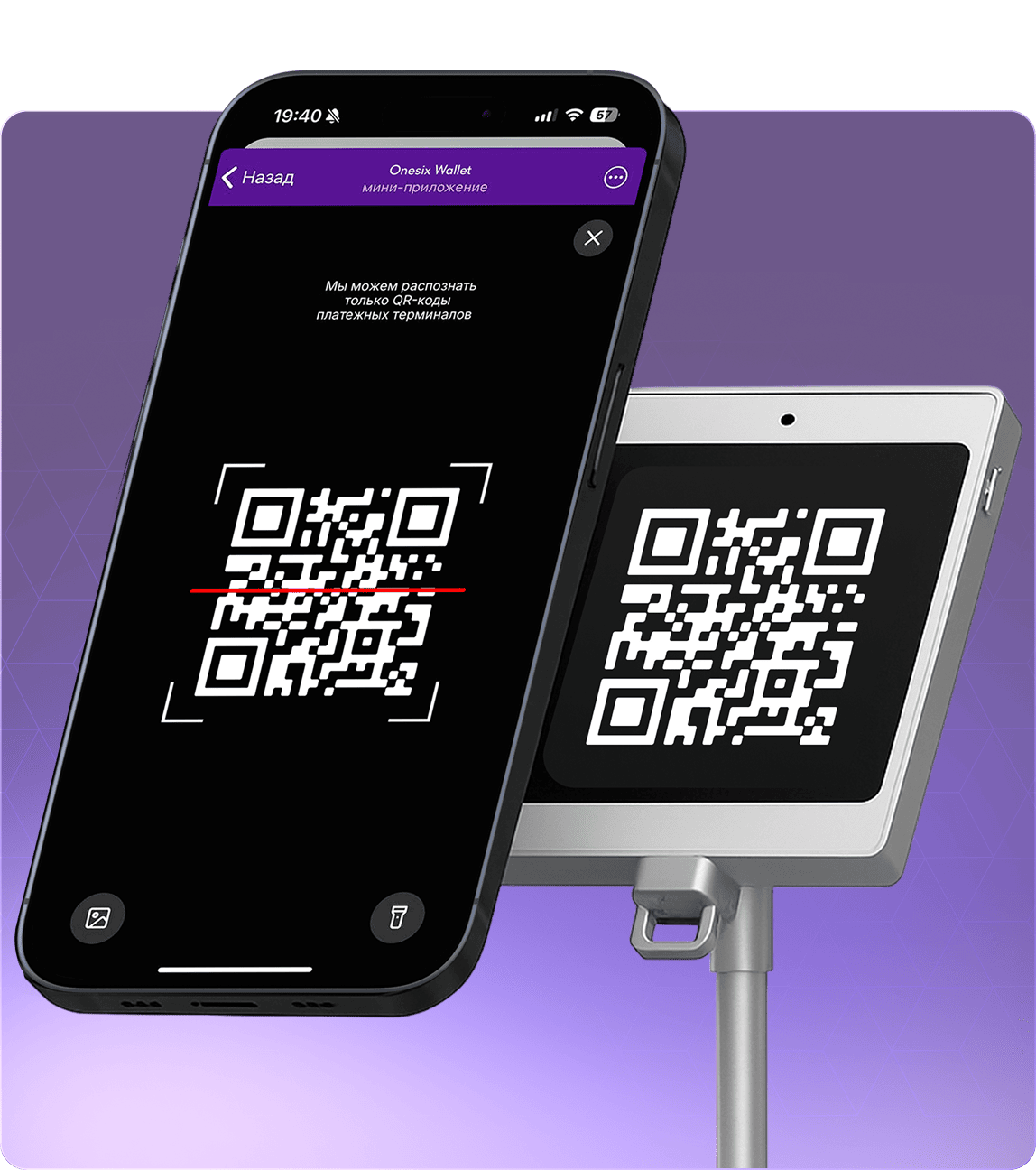
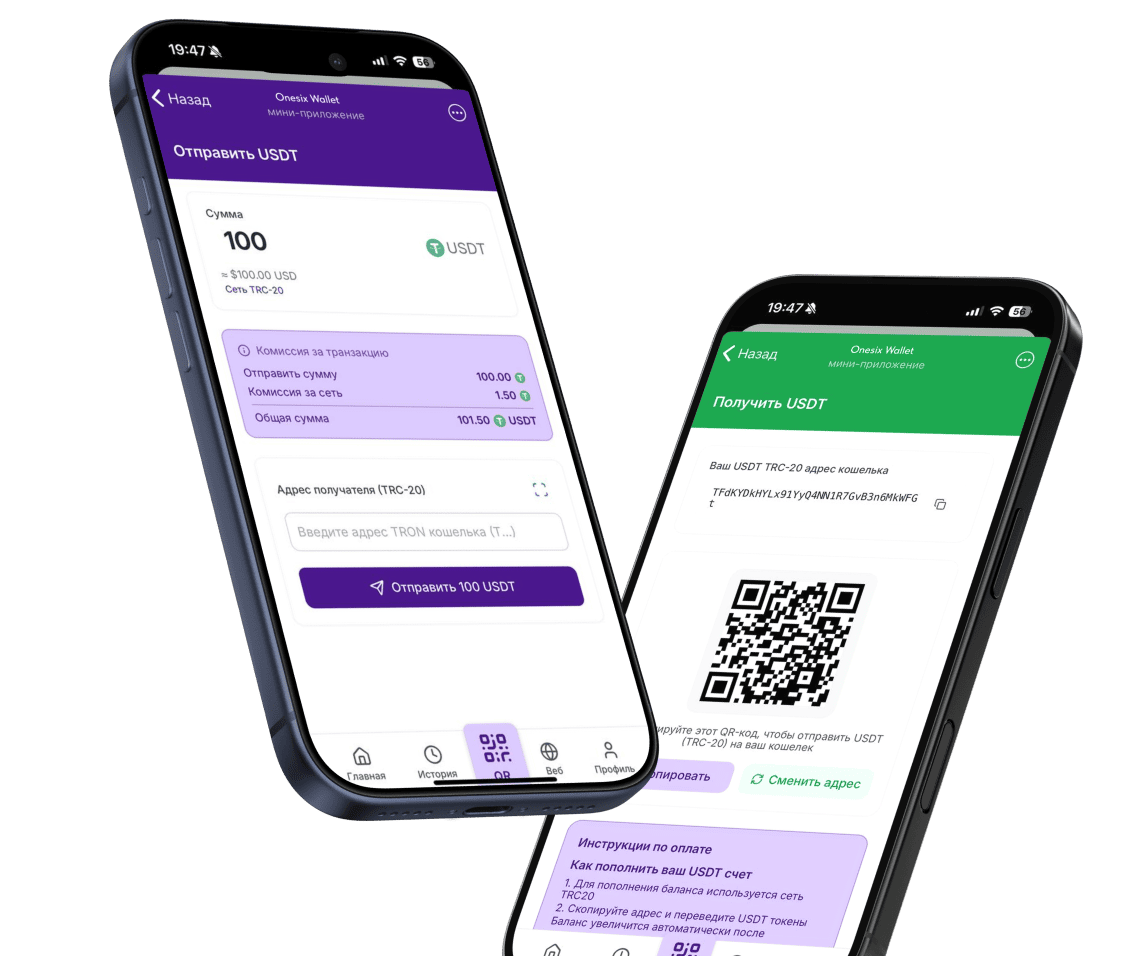
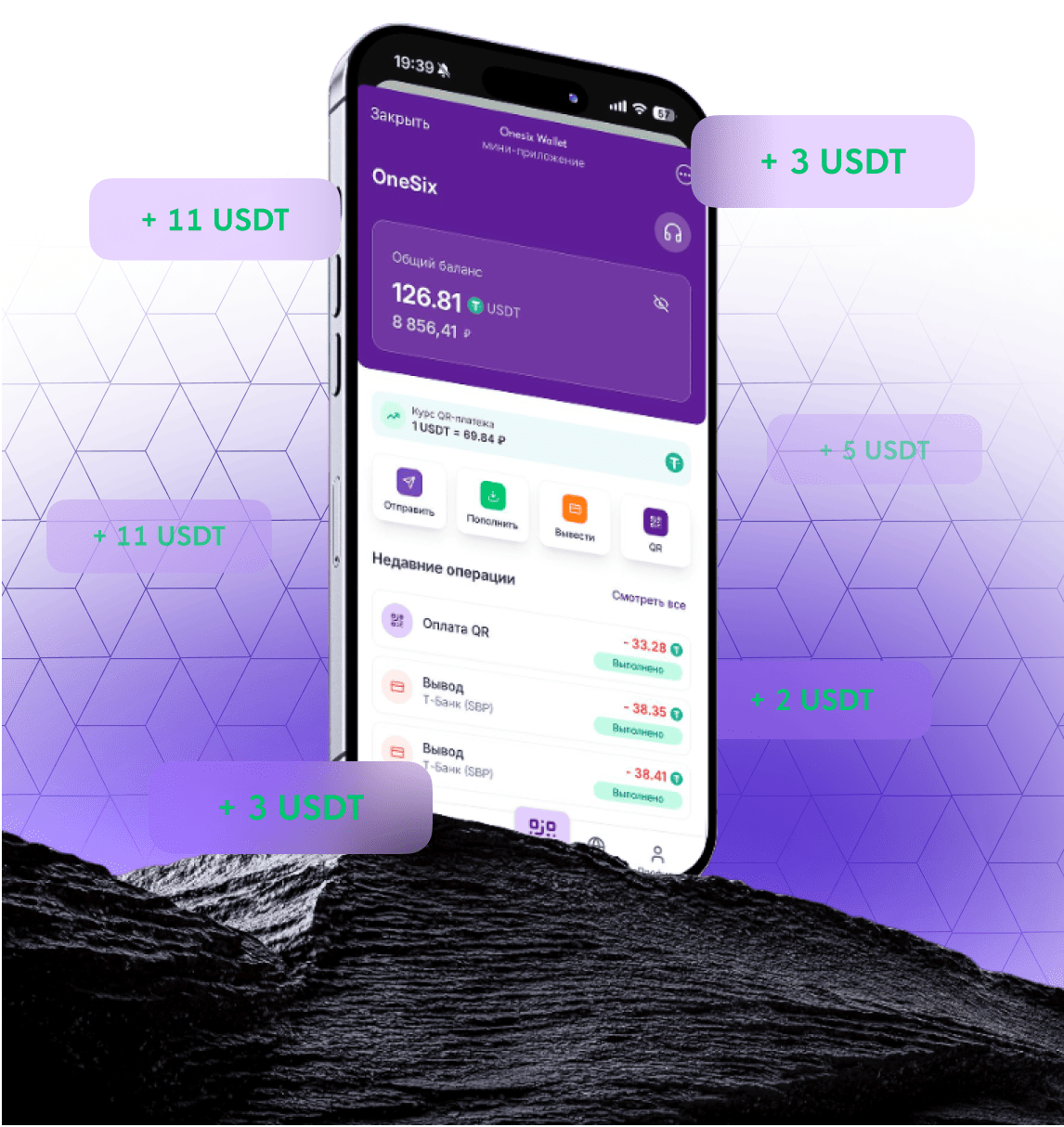
OneSix is a custodial crypto wallet as a Telegram mini‑app that holds USDT (TRC‑20) and can convert it into rubles for SBP QR payments or card withdrawals. For self‑employed professionals and sole proprietors, this means they can keep client payments in USDT but still cover business and personal expenses in rubles without making their card look like a P2P endpoint.

The flow:

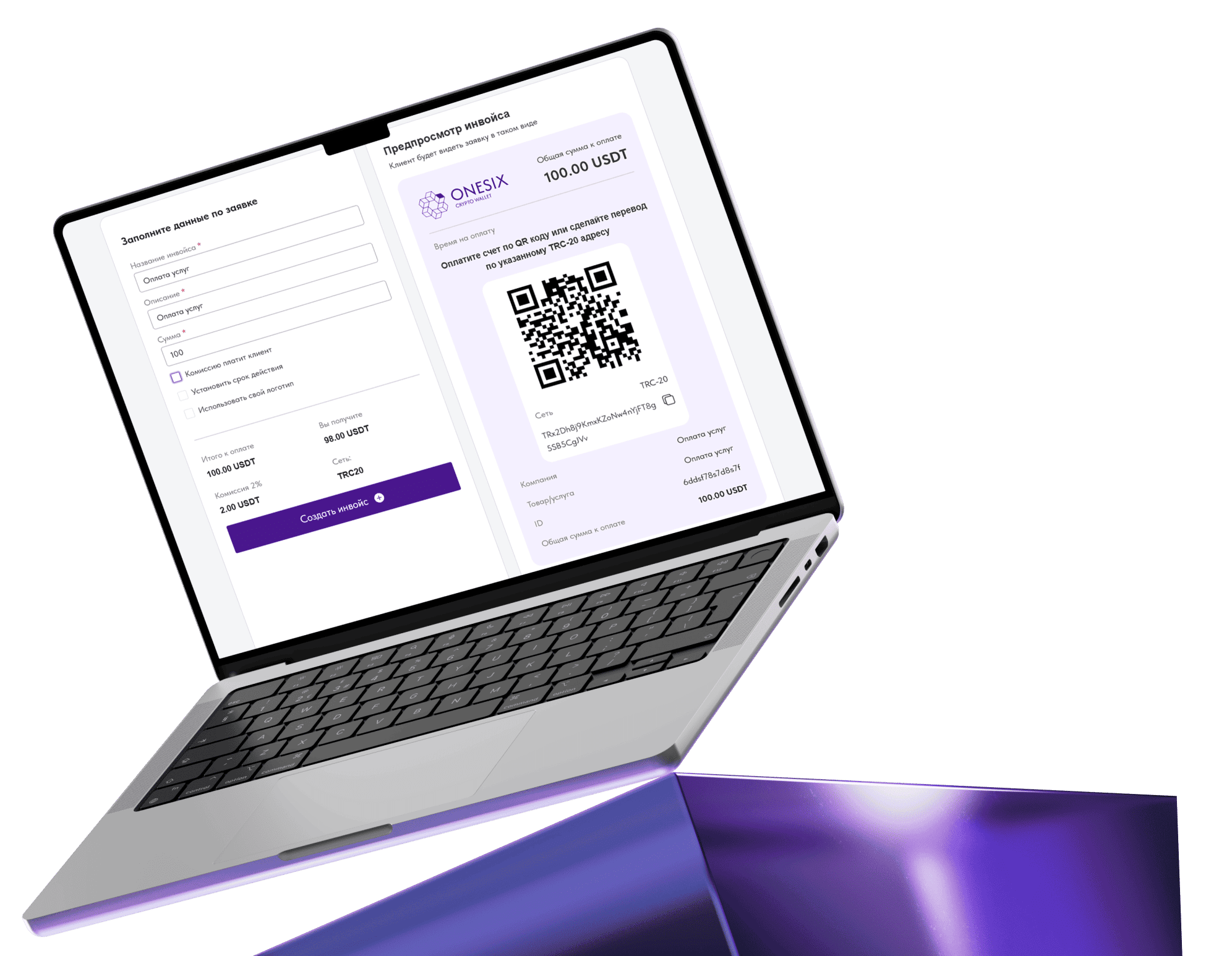
  • clients pay you in USDT (typically TRC‑20) to an exchange account or directly to OneSix;
  • you fund your OneSix balance and pay for expenses — ads, marketplaces, travel, services — via SBP QR codes;
  • for part of the funds you use controlled withdrawals in rubles to a card or business account, staying within sensible limits and usual bank expectations.

Instead of a stream of incoming P2P transfers from random buyers, your bank sees either normal QR‑based payments (as if you had paid directly by card) or understandable ruble inflows from a legal entity or payment agent.

Documents and taxes: staying organised

Legally, crypto is treated as property, and profits from dealing with it are taxable as personal or business income. When a client pays you in USDT, you receive income in kind, and it makes sense to reflect that in your accounting and tax filings.

Minimal good practice includes:

  • using contracts or public offers that explicitly allow payment in crypto (e.g. USDT), while quoting prices in rubles or their equivalent;
  • recording the exchange rate on the date you receive crypto and the ruble amount at that rate;
  • keeping statements from exchanges/wallets, invoices and receipts for major ruble payments;
  • preparing annual tax declarations (personal or business) that include income from both crypto and rubles.

OneSix helps by making your ruble spending pattern clearer: QR payments in rubles are easy to document for tax and bank purposes, while crypto flows are tracked separately in your exchange and wallet histories.

Practical checklist for self-employed and sole proprietors

  • Avoid mass P2P inflows directly to personal or business cards; let clients pay crypto to wallets or exchanges instead.
  • Use a dedicated service like OneSix to convert USDT into rubles and handle SBP QR payments for everyday and business expenses.
  • Separate flows: crypto → wallet → service, rubles → bank card or business account.
  • Maintain records of rates and amounts, keep contracts and invoices, and take the tax side seriously.
  • For larger volumes and regular withdrawals, discuss your status (self‑employed vs sole proprietor vs company) and preferred scheme with a professional accountant or lawyer.

This material is for informational purposes only and does not constitute legal or tax advice. Before deciding on your working structure, legal status and cash‑out routes, consult qualified specialists.